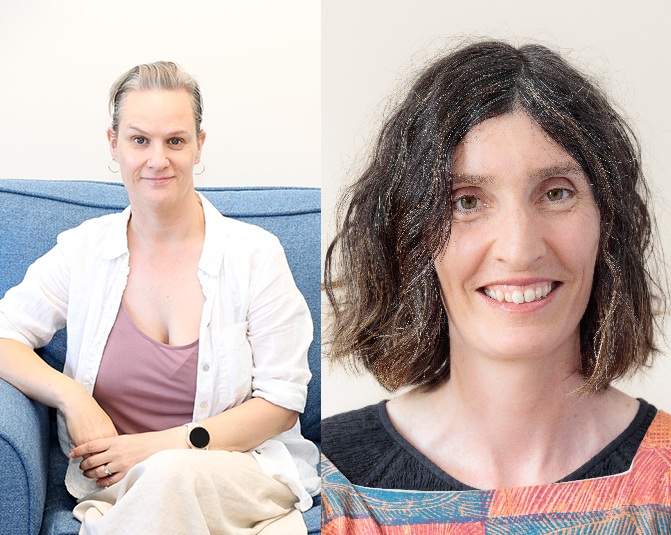
Meet the psychologists:
Suzanne is an EFT psychologist. She works primarily with adults affected by childhood trauma, attachment injuries and difficult emotional experiences.She is particularly interested in how childhood experiences can shape the way people relate to themselves, others and their emotions, and how therapy can help create new emotional experiences that support healing and change.
Christine is an attachment-informed EMDR psychologist. She also works with adults impacted by childhood trauma or attachment issues. She recognises that many traumatic experiences occur within relationships and can influence our capacity to feel safe, connected and secure with others. Through therapy she is interested in helping people live with greater connection, purpose and care for themselves and others.
What will my first session look like?
Suzanne (EFT):
Your first session with me will be all about helping you feel accepted and safe, and comfortable enough to start to open up a little about what has brought you to therapy. Sometimes, starting is really hard. If that is the case for you, then I will guide you into the process. I might ask “what is the hardest thing right now”. You certainly don’t have to jump straight into your trauma. However, you might want to, and that is ok too.
Overall, I want you to feel like you can be yourself. You don’t have to have it all worked out before you arrive. My job is to believe you, let you know that what you experienced was important, and to understand your world as you experienced it.
I will also try to understand what you want from therapy. Together we’ll begin to develop a bit of a plan as to what we will work towards together.
Christine (EMDR):
I think we’d both agree that, in that first session, it’s really important that you feel safe, accepted and comfortable. Our first session will largely be about us getting to know each other and gathering some background information about what has brought you to therapy. You don’t have to have everything worked out or know exactly what you want to change. We can work that out together, and it’s very likely that your aims will become clearer and change as we progress.
Because I work from an attachment-informed perspective, I’ll also be interested in understanding your early experiences, your family and childhood, and the relationships that have shaped you. This helps me understand not just what you’re struggling with now, but how some of those patterns may have developed.
Towards the end of the first session, we’ll begin to collaboratively develop a basic treatment plan and think about how we might approach the things you’ve come to therapy for. While EMDR is an important part of my work, I don’t use it exclusively. Depending on what is most appropriate for you, I may also incorporate mindfulness, schema therapy and some basic CBT strategies. The aim is to tailor therapy to your needs, rather than taking a one-size-fits-all approach.
What happens in a typical session?
Suzanne (EFT):
Your first sessions will often feel like a normal counselling session. We’ll explore what is happening in your life and what is causing distress.
As therapy develops, the sessions often become more experiential, which means instead of just talking about your emotions, I’ll help you start to experience and work with them in the session. I might ask questions that help you notice what is happening emotionally or physically in the moment.
Lots of people come already understanding what is going on intellectually. They know where the anxiety, self-criticism, people-pleasing, perfectionism or relationship difficulties come from. EFT helps us move beyond just ‘knowing’ to working directly with the emotional experiences underneath those patterns so they can be changed.
Christine (EMDR):
A typical session will depend on where we are in the therapy process and what you need on the day. We’ll often want to look at things that are triggering you in the present, so that we can understand what you’re experiencing and what you need right now to help you get on with life. These current triggers will often link back to past experiences, and this is where EMDR processing can be helpful.
Your therapy might involve EMDR, but it may also involve mindfulness, schema therapy or CBT strategies, depending on what is most appropriate for you. Many people expect to jump straight into EMDR processing, but it’s important to understand that EMDR is a staged approach. In most cases, we wouldn’t begin trauma processing until around the third session, as the first few sessions give us time to get to know each other, and do preparation work for EMDR processing.
The aim isn’t simply to talk about the past, but to understand how it may still be affecting you in the present and work towards meaningful change.
Do I have to talk about my trauma in detail?
Suzanne (EFT):
Not necessarily. Talking about trauma repeatedly isn’t always helpful, and in some cases can be retraumatising. I’m often more interested in how those experiences continue to affect you today.
For example, we might start with exploring the fear that appears when someone gets angry with you, or the shame that comes up when you make a mistake, or the loneliness that may be underneath relationship difficulties.
Through talking about current day difficulties, it will lead us back to the specific traumatic detail of the past, that created that difficulty, and we will process and heal that in a very gentle way.
We will move at a pace that feels ok to you. Emotional safety is the most important thing in sessions. So you will never be pushed into discussing experiences before you’re ready.
Having said all of that though, some people need to tell their story from start to finish, and if that’s the case for you, then I will support you to do that in a trauma informed, safe way.
Christine (EMDR):
Similarly to EFT, we don’t have to go into great detail about past trauma. Often, the past trauma will come up naturally as we process the current triggers. However, sometimes memories that we haven’t thought about for a long time can resurface during the processing. This is why we spend time on the preparation phases of EMDR and don’t begin processing until you have developed the skills and resources to manage the process comfortably.
The kinds of triggers you may be experiencing can include sensitivity to criticism, feeling rejected or abandoned, becoming overwhelmed during conflict, difficulty trusting others, or feeling that you’re not good enough.
You won’t be expected to tell me everything that has happened to you or to provide a detailed account of your trauma. You also have a choice about what we work on and the pace at which we do it. If specific memories do come up, we can decide together whether and when it is helpful to work with them. The aim of EMDR processing isn’t to erase the memory, but to help it feel more distant and less emotionally distressing, so that something that once felt overwhelming can become a memory that you can think about without experiencing the same level of distress.
How does your approach differ from other therapies?
Suzanne (EFT):
Many therapies stay at the level of changing thoughts or behaviour. My belief is that you don’t think badly, you feel badly. So to change how we feel we have to change our emotions.
Other therapies attempt to heal trauma by talking about feelings. For example, encouraging you to talk about what happened back then, and how you felt back then.
To change emotions, we need to make them alive again, by experiencing a very small dose of them in session. For example, if we actually feel a little bit of the sadness that we felt back then when your parents weren’t there for you, it activates the brain pattern that was alive at that time. When that brain pattern is active again, it is able to be changed, with a new emotion, like feeling loved, or connected to another.
In your actual life then, when that old sadness would have been triggered, it is no longer triggered, as it has been neutralised with a feeling of being loved or connected.
Christine (EMDR):
I think there’s actually quite a bit of overlap between our approaches, particularly in the idea that it’s not enough to simply understand something intellectually. We need to work with the emotional experiences that are still affecting you in the present.
Where my approach differs is in the way we work with those experiences. With attachment-informed EMDR, we’re interested in understanding how past experiences may still be influencing the way you respond to situations now. You might know, for example, that criticism shouldn’t feel so threatening, but still find yourself feeling overwhelmed, ashamed or rejected when someone is critical of you.
EMDR helps us identify these current triggers and then work back to the experiences that may be contributing to them. Rather than repeatedly talking through what happened, EMDR processing helps your brain reprocess experiences that may still feel unresolved. The aim is for those memories to become less emotionally charged, so that they feel more like something that happened in the past rather than something that is still happening to you now.
The attachment-informed part of my approach also means we look at the relationships and experiences that have shaped you, and how these may be playing out in your life and relationships today. We can then use EMDR alongside approaches such as mindfulness, schema therapy and CBT, depending on what is most helpful for you.
What often surprises clients about your therapy?
Suzanne (EFT):
Many of my clients are surprised by how gentle the therapy is. They expect to feel something close to as bad as the original trauma, or the flashbacks or memories they get.
The experience of therapy should feel very safe and healing. Clients often feel emotionally exhausted, but in a good way. Like after a good exercise session.
Christine (EMDR):
There are a couple of things that often surprise clients. One is realising how much past experiences can still be influencing their current lives, relationships and reactions.
The other is what happens during EMDR processing. An experience that initially felt very distressing can become more distant and feel more like a dream, without carrying the same emotional charge. Clients are often surprised that they can think about something that once felt overwhelming and find that it simply doesn’t feel the same anymore.
Which therapy is better?
Suzanne (EFT):
I think they are both as good as each other. Both therapies are backed by a lot of great research that speaks to their effectiveness.
Both have methods that are quite different to each other (though there is quite a lot of overlap as well) but the outcomes are very similar; the situation that once triggered you doesn’t trigger you anymore.
Christine (EMDR):
Mine, definitely mine! No, seriously, I think they both have some great aspects to them. I’ve really enjoyed learning more about EFT through this conversation and seeing how much overlap there is between our approaches. Although we may get there in different ways, I think we’re both aiming for a similar outcome — helping you understand and work through what is keeping you stuck, so that the things that once triggered you don’t have the same hold over you in the present.
Written in collaboration with Suzanne Hall from Suzanne Nicole Psychology.